Best Food for Small Breed Puppies: 2026
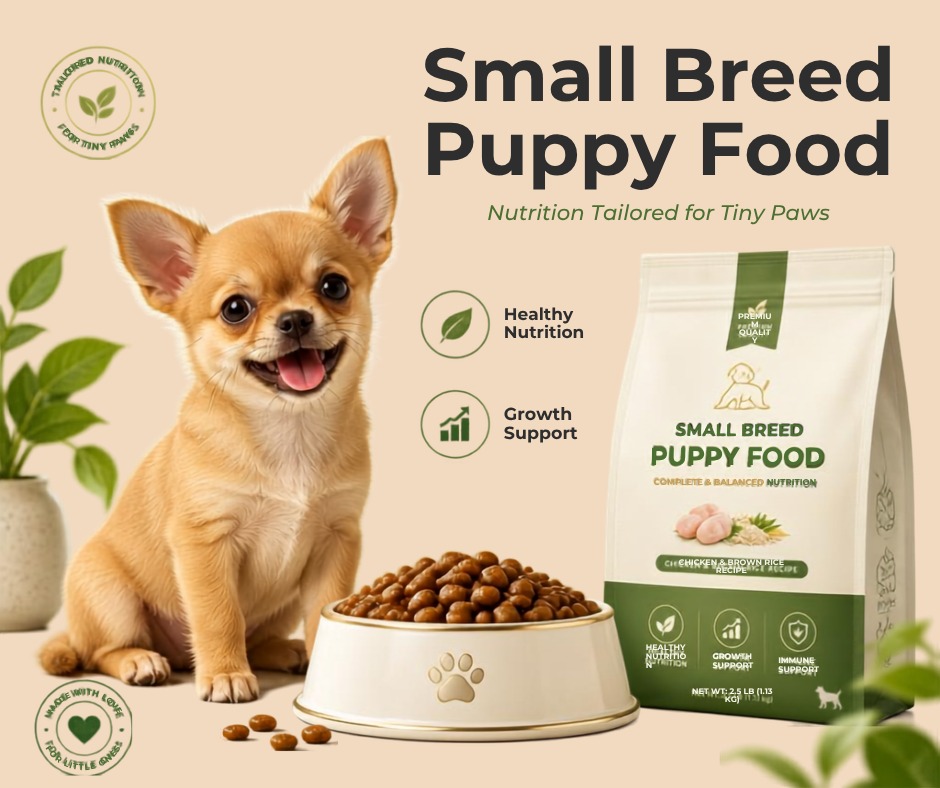
Small breed puppies need unique diets because they grow quickly and have smaller mouths and stomachs than larger breeds. Choosing the right small breed puppy food can help provide them with the protein, healthy fats, vitamins, and minerals they need for healthy growth. A good puppy food should also have the right size kibble that is easy for a small dog to chew and digest. In this guide, we’ll explain what to look for in small breed puppy food and how to choose the right option for your growing puppy.
Key Takeaways
2. What to Look For
3. The Small Breed Nutrition Matrix (Original Framework)
4. Top Options Compared
5. How to Transition Food
6. Common Mistakes 7. FAQ 8. Conclusion
Table of Contents
- Why Small Breed Puppies Need Different Food
- What to Look For
- The Small Breed Nutrition Matrix (Original Framework)
- Top Options Compared
- How to Transition Food
- Common Mistakes
- FAQ
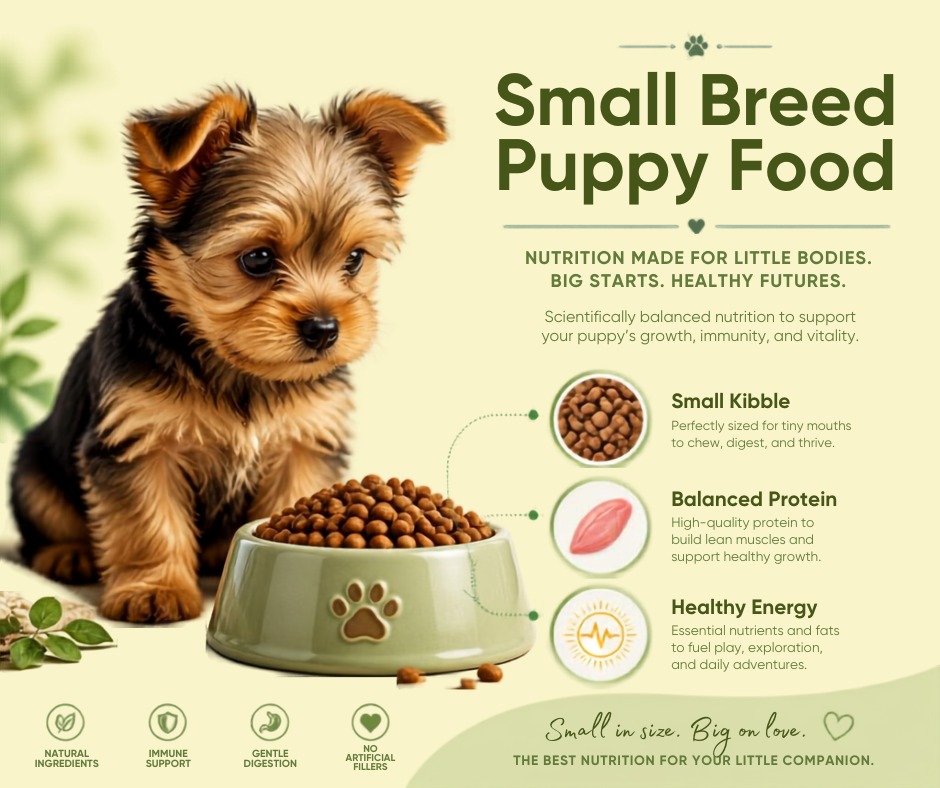
Why Small Breed Puppies food Need Different
:Small-breed puppies have a fast metabolism and a small stomach, and they
are also at a higher risk of low blood sugar levels; therefore, they require frequent feedings
of high-calorie food with small-sized kibble.
Small breed puppy
It is defined as a dog breed with an expected adult weight of less than
20 pounds that reaches full size between the ages of 9 and 12 months (in contrast, larger
breeds take 18 to 24 months to fully mature).
Small dogs have a larger body surface area relative to their body mass, causing them to lose
heat and expend energy rapidly. A 5-pound ‘Yorkie’ puppy requires approximately 200
calories daily, which must be absorbed by a stomach no larger than a walnut.
Hypoglycemia
Real Example: A woman named Dana used to feed her 3-pound ‘teacup Pomeranian’
puppy standard dry food (kibble) twice a day. Over the course of a week, the puppy lost 4
ounces of weight and became lethargic. Her veterinarian switched the puppy to a formula
specifically designed for small-breed dogs, fed four times daily; consequently, the puppy
regained its weight within 12 days
What to Look For
Look for kibble under 10mm, 22-32% protein with real meat listed first, DHA,
and an AAFCO growth statement.
Kibble size
Under 10mm; oversized kibble gets left in the bowl or swallowed whole
Protein and fat
Minimum 22% protein, ideally 25-32%, plus 12-20% fat for calorie
density.
DHA and choline
DHA is an omega-3 fatty acid critical for brain and retinal
development in a puppy’s first year.
Calcium-to-phosphorus ratio
Generally 1:1 to 1.8:1 for balanced bone
development.
The Small Breed Nutrition Matrix
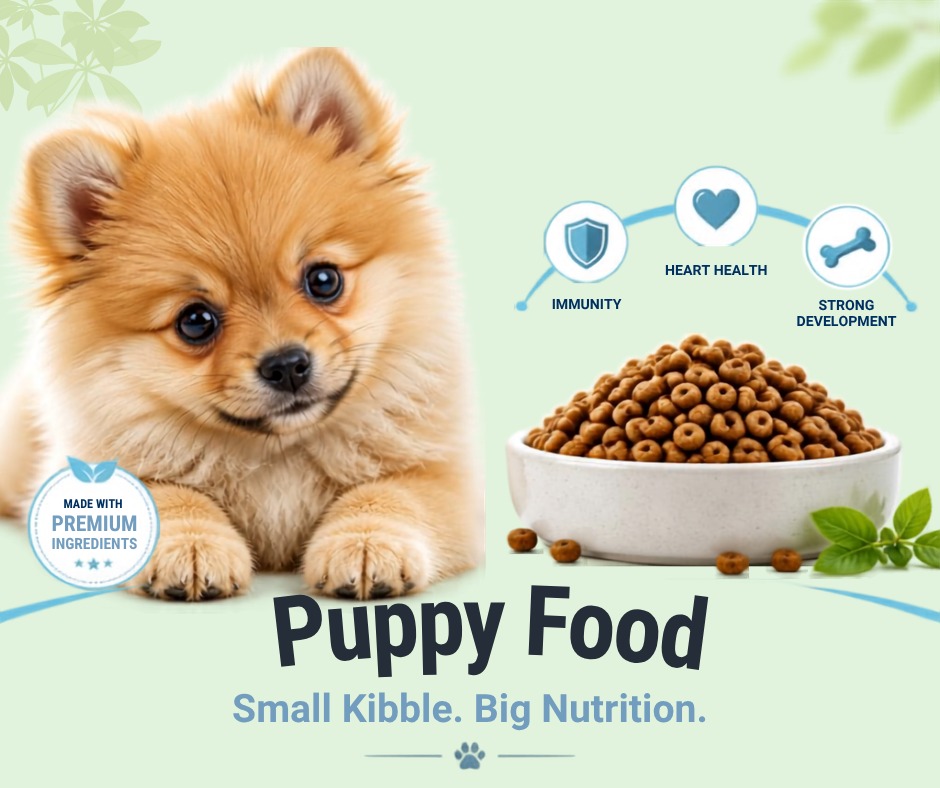
Score any puppy food 1-5 across four dimensions:
- Kibble Fit ; does size match a small jaw?
- Calorie Density ; calories per cup, since small stomachs can’t hold volume
- Growth Nutrient Completeness ; DHA, choline, calcium ratio, AAFCO statement
- Digestive Tolerance ; highly digestible proteins, low in common irritants
Anything averaging below 3.5 probably isn’t worth the bag.
A second framework: the 4-Meal Rule ,feed puppies under 4 pounds four small meals
daily until 4 months old, then taper to three, then two by 6 months.
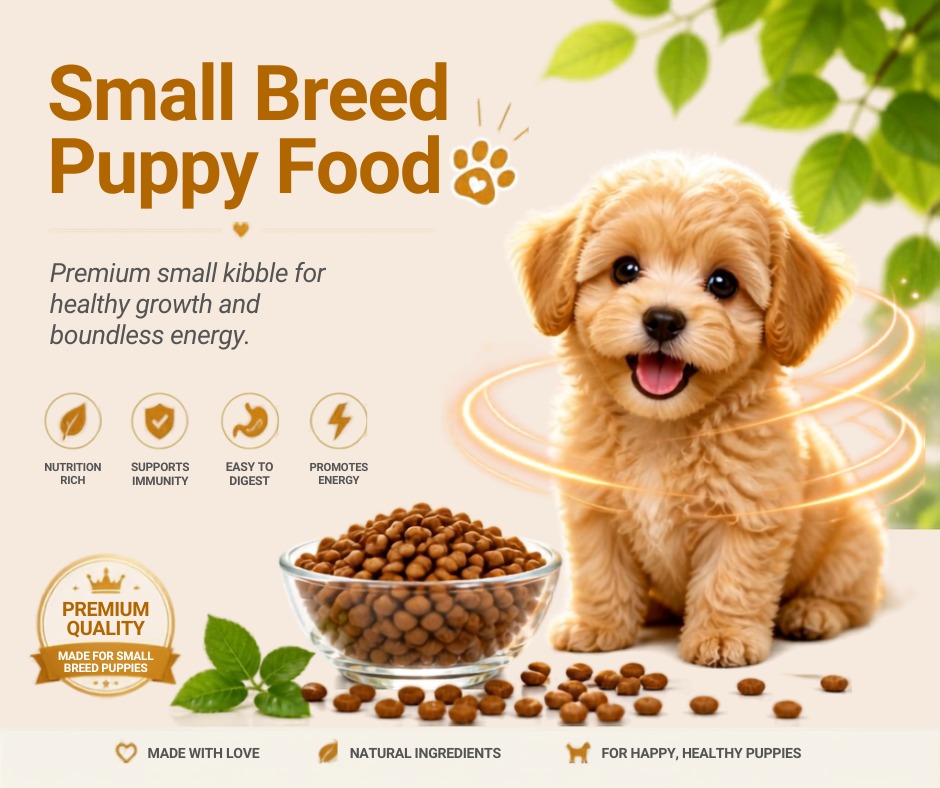
Top Options Compared small breed puppy food
Small-breed-specific formulas consistently outperform generic “all life
stages” food on kibble size and calorie density.
Best Food for Small Breed Puppies Comparison: Top Options at a
Glance
Option Key Feature Best For Price
(40oz)
Ratin
Small-breed dry
kibble (chicken-first)
Kibble under 8mm,
28% protein
Most small breed
puppies
$18-24 4.6/5
Small-breed wet/dry
combo
Higher moisture,
easy for tiny mouths
Puppies under 8 weeks
or poor eaters
$22-28 4.4/5
Limited-ingredient
formula
Single protein source Sensitive stomachs $26-32 4.3/5
Freeze-dried raw
formula
Minimally processed,
high protein
Owners wanting
raw-adjacent diets
$35-45 4.2/5
Generic
all-life-stages kibble
Standard kibble size Not recommended
under 10 lbs
$12-18 3.1/5
Our pick: The small-breed dry kibble scores best on the Nutrition Matrix, balancing kibble
size, calorie density, and completeness without the added cost of freeze-dried raw.
How to choose small breed puppy food
Transition over 7-10 days, since sudden switches are the most common
cause of puppy diarrhea.
- Days 1-2: 25% new food, 75% old
- Days 3-4: 50/50
- Days 5-7: 75% new, 25% old
- Days 8-10: 100% new, watching stool daily
- If diarrhea appears, pause at the previous ratio for 2-3 extra days
Common Mistakes
● Free-feeding all day: Works against the frequent-meal approach toy breeds need.
● Using large-breed kibble to save money: Kibble size alone can cause
under-eating.
● Skipping the AAFCO growth statement: Adult food lacks the calorie density
puppies need.
● Switching foods too fast during a picky phase: Often causes the digestive upset
it’s meant to fix.
FAQ
What is the best food for small breed puppies?
This formula is designed for specific
small-breed dogs, featuring kibble smaller than 10 mm, 22–32% protein, and DHA. Standard
kibble often fails to meet the required standards for size and caloric density.
How does small breed puppy food differ from regular puppy food?
It contains small
kibble and has a higher calorie count per cup, whereas food for large-breed dogs controls
the growth rate by slowing down the speed of calcium absorption.
Why is DHA important?
It supports brain and retinal development during a puppy’s first
year, especially weeks 12-16.
Is it worth paying more for small-breed-specific formulas?
Yes, for
mostly , toy breed puppies, since kibble size, The calorie density directly affect whether , the
puppy eats enough to avoid hypoglycemia.
What’s the best way to switch food without stomach issues?
A gradual 7-10 day , Because
transition, increasing the new food’s ratio every 2-3 days while watching stool consistency.
How much should a small breed puppy eat per day?
Roughly 1/4 to 1/2 cup for a 3-6
pound puppy, split across 3-4 meals, adjusted per the food’s calorie content and vet
guidance.
Small vs. large breed puppy food, what’s the real difference?
Large breed formulas slow
growth to protect joints; small breed formulas maximize calorie density and reduce kibble
size.
My puppy won’t eat the new kibble, what should I do?
Check kibble size and freshness
first.